

Cantilevered wood balconies are a beautiful architectural feature, but they require rigorous maintenance. Because they rely on internal floor joists that extend outward past the exterior wall of a house, any water intrusion can compromise not just the balcony, but the structural integrity of the home itself.
Dry rot (caused by wood-decaying fungi) is the silent enemy of these structures. Because it thrives in damp, unventilated spaces, it often destroys the wood from the inside out before showing obvious signs on the surface.
If you suspect your balcony is at risk, here are the critical warning signs you need to look out for.
1. Visual Indicators of Dry Rot
While dry rot can hide beneath waterproofing membranes and stucco, it eventually leaves distinct visual clues:
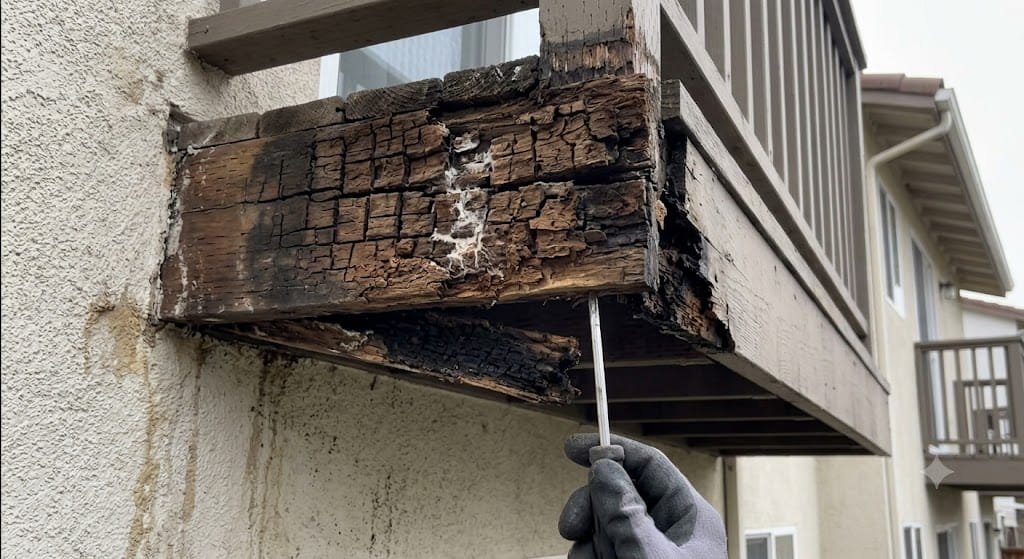
- Wood Cracking and Shrinkage: Affected wood often develops a “cubical fracture” pattern. It breaks down into small, brittle cubes and looks deeply wrinkled or charred.
- Fungal Growth or Spores: You might notice a rust-colored, powdery dust (spores) spreading near the wood. In advanced stages, a velvety, mushroom-like fungus or white, cotton-like strands (mycelium) will appear.
- Discoloration: Wood that has turned abnormally dark brown, or conversely, looks bleached and greyish, is a prime candidate for rot.
- Stucco or Paint Failures: Look at the underside (soffit) of the balcony. Peeling, bubbling, or cracking paint and cracking stucco often mean trapped moisture is rotting the wood underneath.
2. Physical and Structural Warning Signs
Sometimes you can feel or smell dry rot before you can clearly see it. Pay attention to how the balcony behaves:
- Spongy or Soft Wood: If you press a screwdriver or a probe into the wood and it sinks in easily without resistance, the structural fibers have already collapsed.
- The Balcony “Give”: A structurally sound cantilevered balcony should feel completely rigid. If there is any sagging, bouncing, or flexing when you walk on it, water has likely compromised the cantilevered joists where they meet the house.
- Musty Odors: A persistent, earthy, or damp smell around the balcony transitions or interior rooms adjacent to the deck is a strong indicator of active fungal growth.
3. Critical Vulnerability Points to Inspect
Dry rot rarely starts in the middle of a deck board; it begins where water pools or penetrates. Focus your inspection on these high-risk areas:
Is Your Deck Leaking or Rotting?
The Joist-to-Wall Connection (The Ledger/Transition Zone)
This is the most critical point of failure. If the flashing where the balcony meets the exterior wall is damaged or missing, water will run straight down into the structural framing of your home.
The Underside (Soffit)
Look upward from below the balcony. Water stains, damp spots, or dripping water long after the rain has stopped mean the waterproofing system has failed, and the internal joists are constantly soaked.
Around Post Supports and Railings
Where railing posts penetrate the deck surface or fascia, water can easily seep into the unsealed end-grain of the wood if it isn’t perfectly sealed and flashed.
⚠️ CRITICAL SAFETY NOTE: Because cantilevered balconies rely on the continuous strength of the joists extending from inside the home, dry rot in these areas represents a severe structural hazard. If your balcony is sagging, bouncing, or showing advanced signs of cubical cracking on the main support beams, restrict access immediately and call a professional.
Subject Matter Context
Core Pillar Connection: This technical guide is part of our Diagnostics & Repair series. For comprehensive execution and guaranteed results in Canyon Lake, review our official protocol: Deck Building & Construction.